Overview of Gangasagar Tour Package
There are pilgrimages you take for religion, and there are journeys you take for the soul. Gangasagar — where the sacred Ganga finally surrenders herself to the Bay of Bengal — belongs to both categories at once. Hindus believe that a single dip at this confluence washes away the sins of a hundred lifetimes. Even those who arrive without religious conviction tend to leave changed, quietly undone by the sheer scale of sky, sea, and river meeting at the edge of the Indian subcontinent.
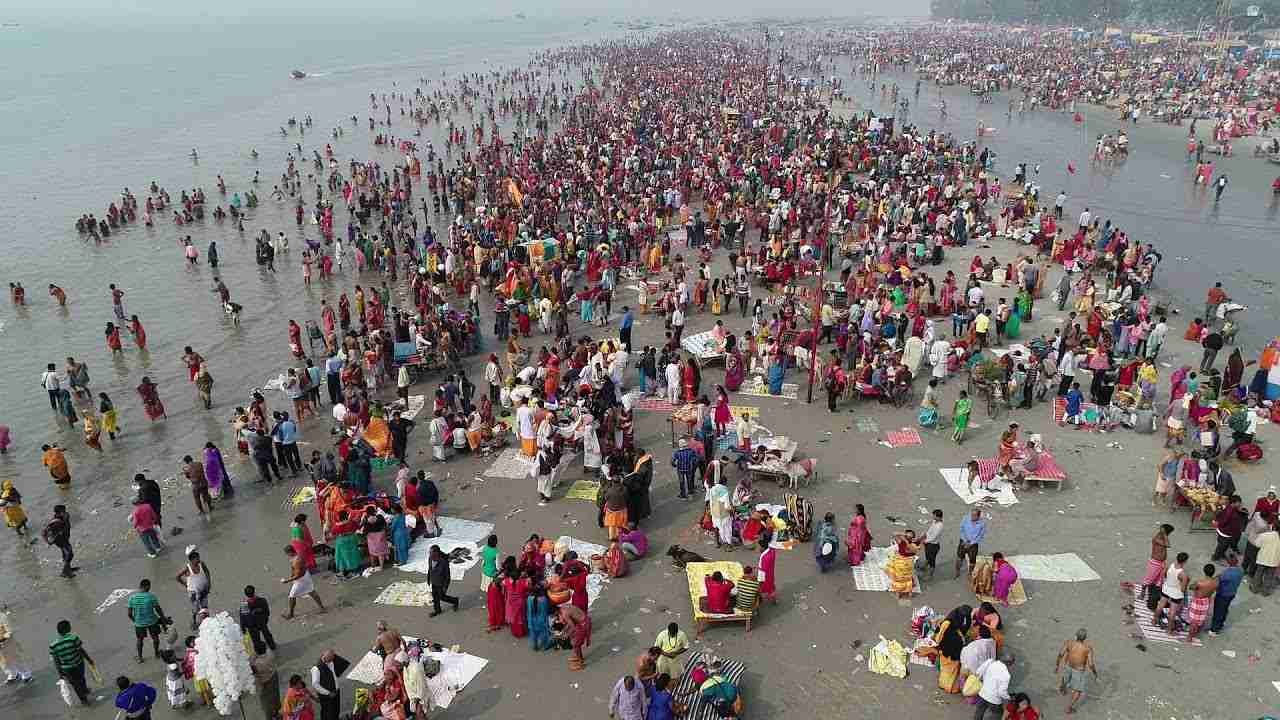
Located on Sagar Island (Sagar Dwip) at the southernmost tip of the Sundarbans delta in West Bengal, Gangasagar is the site of one of the largest human gatherings on earth. Every year on Makar Sankranti — falling around January 14–15 — over a million pilgrims converge on this remote island for the Gangasagar Mela, the great fair that has been held here without interruption for centuries. The occasion draws sadhus from across India, many arriving on foot from distant ashrams, their ash-smeared bodies and matted locks creating a tableau that belongs to another age entirely.
Yet Gangasagar is not only a Makar Sankranti destination. Throughout the year, the island receives a steady flow of pilgrims and curious travellers drawn by the Kapil Muni Ashram, the long and windswept beach, the working fishing communities along the shoreline, and the rare experience of standing where one of the world’s great rivers becomes the sea. A Gangasagar tour package from Kolkata is one of the shortest, most accessible, and most emotionally resonant journeys that West Bengal offers — and it remains, despite growing tourist interest, remarkably unpolished and genuine.
Whether you are searching for a Gangasagar pilgrimage package, a Gangasagar Mela tour from Kolkata, or simply a weekend escape to the Bengal coast with deep cultural meaning, this guide covers everything you need to plan and book your visit.
Geographical Specifications of Gangasagar
Gangasagar sits at the southern tip of Sagar Island, the largest island in the Indian portion of the Sundarbans delta. The island lies in the South 24 Parganas district of West Bengal, roughly 100 kilometres south of Kolkata by road and ferry — making it one of the closest sacred pilgrimage sites to the city.
Sagar Island is not a remote wilderness. It has a permanent population of around 200,000 people who farm, fish, and live ordinary lives on the delta. But the landscape it occupies is extraordinary: a low, flat island encircled by tidal rivers and the open sea, criss-crossed by creeks and lined with casuarina groves that bend in the constant coastal wind. The horizon is immense here — because the land is so flat and the sky so wide, you feel the curvature of the earth at the water’s edge.
The sacred confluence point — where the Gangasagar bathing ghat, Kapil Muni Ashram, and the main beach meet — is at the southernmost tip of the island. The sea here runs a tawny, powerful brown-green where river silt meets ocean swell, and in this colour lies the entire spiritual meaning of the place: the Ganga, carrying the sediment of the subcontinent’s heartland, visibly merging with the infinite sea.
| Specification | Detail |
|---|---|
| Location | Sagar Island (Sagar Dwip), South 24 Parganas, West Bengal |
| Distance from Kolkata | ~100 km (road + ferry combined) |
| District | South 24 Parganas |
| Island Area | Approximately 300 sq km |
| Primary Confluence | River Hugli (Ganga) meets the Bay of Bengal |
| Nearest Railhead | Namkhana Railway Station (~14 km from Kachuberia Ghat) |
| Ferry Route | Harwood Point / Lot 8 Ghat ↔ Kachuberia Ghat, then road to Sagar |
| Terrain | Low-lying deltaic plain, tidal creeks, casuarina coastal forest, sandy beach |
| Altitude | Near sea level (0–5 m) |
| Nearest Airport | Netaji Subhas Chandra Bose International Airport, Kolkata (~120 km) |
| Permit Required | No special permit required for Indian nationals |
Best Time to Visit Gangasagar
Choosing the right time for your Gangasagar tour package makes an enormous difference to the experience. The island has four distinct seasonal personalities — here is an honest breakdown of each.
Makar Sankranti — January (Peak Pilgrimage Season)
The most significant time to visit Gangasagar is the days surrounding Makar Sankranti (January 14–15), when the Gangasagar Mela transforms this quiet delta island into one of the world’s great human gatherings. Sadhus, saints, and ordinary pilgrims arrive from every state — many having walked hundreds of kilometres. The beach becomes an immense canvas of humanity: orange-robed monks, chanting women with flower offerings, vendors selling sindoor and conch shells, and the continuous sound of bells and devotional music rolling over the sea wind.
If you are booking a Gangasagar Mela tour package from Kolkata, do so at least 3–4 months in advance. Accommodation on the island and at all transit points fills up completely. Nights are cool (12–16°C), days are clear and pleasant (20–24°C), and the atmosphere is charged with an energy that is impossible to adequately describe in advance and impossible to forget afterwards.
Winter — November to February (Best Time Overall)
Outside the mela period, winter is the best time to visit Gangasagar. The weather is genuinely pleasant — cool sea breezes, warm sunny days between 18–24°C, and comfortable nights. The beach is peaceful, the light in the late afternoon is golden and soft, and the ashram is calm enough to spend real time in. This is the ideal season for travellers seeking a Gangasagar pilgrimage tour or a quiet coastal retreat without the extraordinary crowds of Sankranti. Most Gangasagar winter tour packages from Kolkata run from November through February for precisely this reason.
Summer — March to May
Temperatures climb into the low-to-mid 30s°C and coastal humidity builds through April and May. A Gangasagar summer tour is quieter — fewer pilgrims, more accessible accommodation, lower package prices — but the heat can be enervating, particularly on the open ferry crossing and the exposed beach. If you are visiting purely for the spiritual experience and are comfortable with warm weather, summer offers an uncrowded and deeply contemplative version of the destination.
Monsoon — June to September
The monsoon brings heavy rainfall, rough seas, and occasional cyclonic disturbances. The Bay of Bengal is one of the world’s most active cyclone basins, and ferry services are frequently disrupted or suspended during heavy weather. The island takes on a lush, atmospheric quality, but the practical difficulties — waterlogged roads, unpredictable crossings, limited accommodation service — mean that Gangasagar monsoon tours are recommended only for experienced, flexible travellers with no fixed return schedule.
Kolkata to Gangasagar Tour Highlights
A well-planned Gangasagar tour package from Kolkata offers far more than a single sacred dip. Here are the experiences that define this journey.
The Sacred Confluence at Dawn — There is a particular quality to the light at the Gangasagar bathing ghat in the hour before sunrise, when the horizon separates itself from the sea and the first pilgrims wade in. The sound of chanting, the smell of incense and marigold, the immensity of water on all sides — it is one of the most powerful sensory experiences West Bengal offers. This dawn ritual is the single moment most travellers cite as the reason they return to Gangasagar.
Kapil Muni Ashram — The Sacred Heart of Gangasagar — The presiding deity of Gangasagar is Kapil Muni, the sage whose ashram stands at the confluence. According to the Mahabharata and the Ramayana, it was here that Kapil Muni’s divine fire reduced the 60,000 sons of King Sagar to ashes — and it was to retrieve their souls that Bhagirath brought the Ganga down from the heavens to earth. The Kapil Muni Temple Gangasagar has been rebuilt multiple times as the sea has eroded the coastline, and its current form is a vibrant, active complex that draws pilgrims year-round.
Gangasagar Mela — January — If you time your visit for Makar Sankranti, the Gangasagar Mela is one of the defining spectacles of Indian religious life. The gathering regularly exceeds a million people in peak years and is not merely about the sacred dip — it is an entire world of temporary markets, cultural performances, discourses by holy men, and the electric atmosphere of mass shared purpose. Sitting beside a renunciant sadhu from Rajasthan who has walked to Gangasagar is an encounter with a dimension of India that urban life rarely opens.
Gangasagar Beach — One of the longest and least-developed beaches on the Bengal coast, Sagar Island beach is wide, windswept, and largely deserted outside the mela period. There are no commercial beach setups here — just pale grey-brown sand, real oceanic waves, and casuarina trees bending in the sea wind. Walking the beach at low tide is one of the finest and simplest pleasures this part of Bengal offers.
The Ferry Crossing Across the Hugli — Getting to Sagar Island involves a ferry crossing from Harwood Point (Lot 8 Ghat), and the crossing itself is an integral part of the Gangasagar tour experience. The Hugli at this point is wide, fast, and powerfully tidal — a dark, muscular river carrying the force of an entire subcontinent’s drainage. Watching the forested island bank approach across the broad water gives you a felt sense of why this place has been considered sacred for millennia.
Sundarbans Delta Landscape — The road from Kolkata to the ferry ghats, and the drive across Sagar Island, passes through the outer Sundarbans delta — a landscape of waterways, embankments, rice paddies, fishing boats, and mangrove fringes entirely unlike the rest of Bengal. For first-time visitors, this drive is revelatory.
Gangasagar Lighthouse — The lighthouse standing near the beach offers elevated views over the confluence and the surrounding coastline. On clear days you can see the open Bay of Bengal stretching south with no visible land interruption — a perspective on the subcontinent’s geography that is quietly staggering.
Local Life on Sagar Island — Beyond the pilgrimage, Sagar Island has a living community of farmers, fishermen, and craftspeople. The local market near the ashram sells fresh catch, coconuts, and homemade snacks. Watching the morning fish auction or sitting in a small tea shop while a fisherman mends his nets gives the Gangasagar tour an authenticity that purely transactional pilgrimage tourism often misses.
Gangasagar Tour Package Itinerary From Kolkata — 3 Days / 2 Nights
Most Gangasagar tour packages from Kolkata run over 2 days and 1 night at minimum. The following 3-day Gangasagar itinerary is our recommended format, building in genuine time at the confluence, the ashram, and the island rather than rushing the experience.
Day 1 — Kolkata to Gangasagar (Sagar Island)
Route: Kolkata → Harwood Point (Lot 8 Ghat, Kakdwip) → Ferry → Kachuberia Ghat → Gangasagar · ~4–5 hours total
Depart Kolkata early morning by 6–7 AM by private vehicle. The drive south to Harwood Point (Lot 8 Ghat) at Kakdwip takes approximately 2.5–3 hours, passing through the outer suburbs of the city, the agricultural belt of South 24 Parganas, and the increasingly flat, water-threaded delta landscape of the lower Ganga plain. Board the government ferry at Lot 8 Ghat for the crossing to Kachuberia Ghat on Sagar Island — roughly 30–45 minutes across the broad, swift-flowing Hugli.
From Kachuberia, travel approximately 30 km by vehicle through the island’s interior to the Gangasagar beach area. Check in to your guesthouse or lodge near the ashram. After lunch, visit the Kapil Muni Ashram for the afternoon aarti — a devotional ceremony that begins around 4 PM and is at its most atmospheric as the light fades across the confluence water. Spend the evening walking the beach as the sun sets over the delta. Dinner and overnight at Gangasagar.
Places covered: Lot 8 Ghat, Kachuberia Ghat, Kapil Muni Ashram evening aarti, Gangasagar Beach
Day 2 — Sacred Confluence, Lighthouse & Island Exploration
Full Day on Sagar Island
Rise before dawn for the most spiritually charged experience the island offers: the pre-sunrise ritual bath at the Gangasagar ghat. Even outside the mela period, pilgrims are almost always present at this hour, chanting and wading into the confluence water as the eastern sky turns from grey to rose to gold. Allow yourself to simply be present — this is not a moment to rush.
After breakfast, visit the Kapil Muni Temple in the morning light when the compound is calm and the priests are performing the morning puja. Spend time at the temple, learn about the mythological significance of the site, and understand why this is considered one of the holiest tirthas in Hinduism — with the popular saying “Sab teertha baar baar, Gangasagar ek baar” (All pilgrimages again and again, Gangasagar but once) capturing its supreme status among devotees.
Mid-morning, walk to the Gangasagar Lighthouse for elevated views of the coastline and confluence. Continue to the beach for an unhurried walk along the shoreline. Visit the local island market near the ashram for fresh coconuts, local sweets, and shell handicrafts. In the afternoon, explore the northern parts of Sagar Island where rice fields and fishing settlements give way to tidal creek margins — a gentle introduction to the broader Sundarbans delta ecosystem. Return to your guesthouse for dinner and a second overnight on the island.
Places covered: Gangasagar Bathing Ghat at dawn, Kapil Muni Temple morning puja, Gangasagar Lighthouse, Sagar Island beach walk, local island market, delta village exploration
Day 3 — Morning at the Ghat, Return to Kolkata
Route: Gangasagar → Kachuberia Ghat → Ferry → Lot 8 Ghat → Kolkata · ~4–5 hours
Wake for one final morning at the ghat — many travellers find this the most peaceful hour of the entire Gangasagar trip, when the previous day’s experience has settled and the light on the water is at its most quietly beautiful. After breakfast, check out and travel back to Kachuberia Ghat for the return ferry to Harwood Point. The drive back to Kolkata arrives by mid-afternoon, completing a short but genuinely rich pilgrimage journey.
Places covered: Final dawn visit to Gangasagar Ghat, Kachuberia ferry terminal, return road journey through South 24 Parganas delta
Places to Visit During Gangasagar Tour From Kolkata
1. Kapil Muni Ashram and Temple
The spiritual anchor of the entire island, the Kapil Muni Ashram Gangasagar stands at the exact confluence of the Ganga and the Bay of Bengal. The present temple complex is built over the site where the sage Kapil Muni is believed to have meditated and where the mythological events of the Sagara legend unfolded. The compound includes the main temple, Gangasagar bathing ghats, smaller shrines, and a dharamsala for pilgrims. It is active, colourful, and genuinely devotional — not a heritage monument but a living place of daily worship and one of the most important pilgrimage sites in West Bengal.
2. Gangasagar Bathing Ghat
The sacred bathing point where the Ganga meets the sea is the defining destination of any Gangasagar pilgrimage tour. On Makar Sankranti, millions bathe here in one of the largest ritual gatherings anywhere in the world. On ordinary days, small groups of pilgrims arrive at all hours — particularly around dawn and dusk — to perform the sacred dip and float flower offerings on the current. The ghat is simple and unmonumental, but the emotional and spiritual weight of the place is extraordinary and felt by almost everyone who stands at the water’s edge.
3. Gangasagar Beach (Sagar Island Beach)
A long, largely unspoilt coastal stretch running south of the ashram, Gangasagar beach is backed by casuarina woodland and faces the full force of the Bay of Bengal. There is no commercial development along this shoreline — no beach chairs, no vendors selling tourist trinkets. What you get instead is a wide, honest stretch of sea and sky that belongs entirely to the place itself. Swimming is not recommended due to strong tidal currents, but walking and sitting at the water’s edge during golden hour is the most serene experience this Sagar Island tour offers.
4. Gangasagar Lighthouse
The white-painted Gangasagar Lighthouse near the beach provides the only elevated perspective on this flat island. From the upper levels, the full panorama of the confluence is visible — brown river water and grey-blue sea swirling and merging in a widening fan — and the geometry of the delta coastline below is striking. It is one of the most instructive viewpoints on the Gangasagar tour for understanding the physical geography of where you are standing.
5. Lot 8 Ghat (Harwood Point Ferry Terminal, Kakdwip)
The ferry terminal on the mainland side — approximately 2.5 hours south of Kolkata — is more than a transit point in the Gangasagar tour route. The Lot 8 Ghat is busy with pilgrims, vendors, porters, and ferries, and the organised energy of thousands of people crossing the river in shared purpose has a vitality entirely its own. During the Gangasagar Mela, the ghat areas become a vast temporary city of tents, food stalls, and devotees who have arrived from every corner of India.
6. Kachuberia Ghat and Village
The arrival point on Sagar Island, Kachuberia is a small settlement of tea stalls, vegetable vendors, and cycle-rickshaw wallahs. It is the most ordinary place on the Gangasagar itinerary — and for that reason, one of the most honest. A cup of tea at a roadside stall here, watching the ferry unload the next wave of pilgrims while crows and kites wheel overhead, is an unremarkable and entirely memorable way to arrive.
7. Sagar Island Interior and Delta Villages
The island’s interior is an under-visited part of any Sagar Island tour. Travelling through the island by vehicle reveals a landscape of raised embankments, winter mustard fields, rice paddies, fishing settlements, and tidal creeks that have supported communities for generations. This is the Sundarbans delta at its most inhabited and human — an important counterpoint to the purely spiritual focus of the pilgrimage sites.
8. Namkhana (Alternative Ferry Route)
For travellers approaching Gangasagar by train, Namkhana Railway Station on the Sealdah–Namkhana line is an alternative entry point, from which a short drive reaches the ferry ghat to Sagar Island. The Namkhana route is less commonly used for organised Gangasagar tour packages from Kolkata but is an option worth knowing for independent travellers or those combining Gangasagar with a visit to the nearby Sundarbans.
Frequently Asked Questions About Gangasagar Tour Package
1. What is the Gangasagar tour package cost from Kolkata, and what is typically included?
The Gangasagar tour package price from Kolkata varies depending on the duration, accommodation category, group size, and whether the visit coincides with the Makar Sankranti mela. A standard 2-day 1-night Gangasagar package for a small group typically includes private vehicle transfers from Kolkata, ferry charges, accommodation at a guesthouse on Sagar Island, and meals. 3-day Gangasagar tour packages with more comfortable accommodation and guided ashram visits are also available. Prices increase significantly during the Gangasagar Mela period due to high accommodation demand. Contact Bengal Tour Plans for current pricing and customised group quotes.
2. How do I travel from Kolkata to Gangasagar — what is the best route?
The standard Kolkata to Gangasagar route involves driving approximately 2.5–3 hours south to Harwood Point (Lot 8 Ghat) at Kakdwip, taking the government ferry to Kachuberia Ghat on Sagar Island (30–45 minutes), then travelling 30 km by vehicle to the Gangasagar beach and ashram. Total journey time is 4–5 hours from central Kolkata. An alternative approach uses the Sealdah–Namkhana train to Namkhana, followed by a short road transfer to the Namkhana ferry ghat. When you book a Gangasagar tour package with Bengal Tour Plans, all transfers including ferry coordination are managed end-to-end.
3. Is Gangasagar safe to visit, and what precautions should I take?
Gangasagar is safe for general visitors throughout the year, with a few practical considerations. Strong tidal currents make swimming at the beach inadvisable. During the Gangasagar Mela, the extraordinary crowd density requires awareness — keep your group together, establish a meeting point, and follow police and volunteer marshal directions. Carry sufficient cash as ATM availability on the island is very limited, and digital payment acceptance is patchy at smaller vendors. Medical facilities on the island are basic; for any serious health concern, evacuation to Kolkata or Kolkata-side facilities is necessary. During the mela, additional government medical camps are operational.
4. What should I pack for a Gangasagar tour from Kolkata?
For winter Gangasagar tours (November–February): a light fleece or woolen layer for evenings and the ferry crossing, comfortable walking shoes or sandals for the beach and temple, modest clothing for the ashram (shoulders and legs covered as a mark of respect), sunscreen, and a reusable water bottle. For summer Gangasagar tours: light cotton clothing, strong SPF 50 sunscreen, a hat, and extra water. At all times: personal medications, Aadhaar card or ID, and sufficient cash. If visiting for the Gangasagar Mela, carry a small waterproof bag to keep your phone and valuables dry at the bathing ghat, and wear simple clothing you don’t mind getting wet if you plan to take the sacred dip.
5. Can Gangasagar be visited as a day trip from Kolkata, or is an overnight stay necessary?
A Gangasagar day trip from Kolkata is technically possible — departing by 5–6 AM and returning by 9–10 PM — but it is strongly not recommended. The journey time of 4–5 hours each way leaves only a few hours at the destination, and none of the experiences that make Gangasagar genuinely memorable — the pre-dawn ritual bath, the evening aarti at the ashram, the silence of the island at night, the golden light on the confluence at sunrise — are available on a day trip. An overnight stay, or ideally a 2-night Gangasagar tour package, transforms the experience entirely. Bengal Tour Plans recommends the 3-day 2-night itinerary for any first-time visitor who wants to understand why generations of pilgrims have called this place irreplaceable.
Call / WhatsApp: +91-8420361281
Booking: https://bengaltourplans.com/contact/
Office: 50/8D Harish Mukherjee Road, Annapurna Bari, near PG Hospital, Kolkata – 700025
Follow us on: Facebook & YouTube