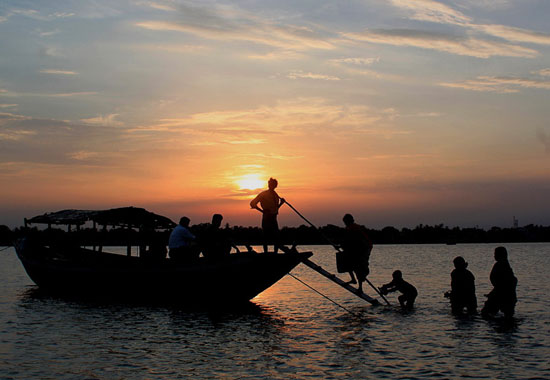
Overview of Taki Package Tour From Kolkata
There is a particular kind of travel that does not ask you to climb a mountain or cross a border or endure a long journey. It simply asks you to slow down — to sit beside a river as the light changes, to watch fishing boats return at dusk, to eat fresh hilsa in a small restaurant where the owner knows every customer by name. Taki is that kind of destination, and a Taki package tour from Kolkata is one of the most quietly rewarding short breaks that West Bengal offers.
Located just 70 kilometres north of Kolkata on the banks of the Ichamati River, Taki is a small riverside town in the North 24 Parganas district of West Bengal that has been drawing Bengali weekenders for generations. What they come for is not a single landmark or a grand spectacle — it is the accumulation of small pleasures that defines the Taki experience: the wide, peaceful river with Bangladesh visible on the far bank, the crumbling grace of old zamindar mansions half-swallowed by bougainvillea, the forest of mangrove and casuarina at Atharobaki, the evening light on the water, and the deep, restorative quiet of a town that has never been in a hurry.
Taki is sometimes called the “Mini Sundarbans of North 24 Parganas” — a reference not just to its mangrove-fringed waterways but to the way it offers a taste of delta wilderness without the logistics of a full Sundarbans expedition. The Ichamati River here forms the international border between India and Bangladesh, and standing on the Taki riverbank watching Bangladesh’s green treeline across the water is one of those unexpectedly moving geographical experiences that only a border town can offer.
A Taki tour package from Kolkata works beautifully as a 1-night or 2-night weekend getaway — close enough to reach without fatigue, different enough from the city to feel like a genuine escape, and rich enough in atmosphere, history, and natural beauty to fill two days without effort. It is a destination that rewards travellers who are willing to find pleasure in the unhurried and the understated.
Geographical Specifications of Taki
Taki sits on the western bank of the Ichamati River in the North 24 Parganas district of West Bengal. The Ichamati, a distributary of the Ganga, forms a natural international boundary here — Bangladesh lies directly across the water on the eastern bank. This border geography gives Taki an unusual geopolitical and cultural character: it is a deeply Bengali town in the truest sense, but one that exists at a frontier, looking across the river at a country that was, until 1947, the same land.
The town sits at the edge of the lower Bengal delta, where the terrain is almost entirely flat and the landscape is shaped by water — rivers, creeks, tidal channels, and ponds that reflect the enormous Bengal sky. The surrounding area includes stretches of mangrove forest, wetlands, and agricultural land that support a rich diversity of birdlife, making Taki of particular interest to birdwatchers alongside history and leisure travellers.
| Specification | Detail |
|---|---|
| Location | Taki, North 24 Parganas, West Bengal |
| Distance from Kolkata | ~70 km (approximately 2–2.5 hours by road) |
| District | North 24 Parganas |
| River | Ichamati River (international border with Bangladesh) |
| Terrain | Flat deltaic plain, mangrove creeks, tidal waterways, agricultural land |
| Altitude | Near sea level (2–5 m) |
| Nearest Railway Station | Taki Road Railway Station (on the Sealdah–Hasnabad line) |
| Train Route from Kolkata | Sealdah to Hasnabad local, alight at Taki Road (~2 hours) |
| Road Route from Kolkata | NH12 via Barasat and Basirhat (~70 km) |
| Nearest Airport | Netaji Subhas Chandra Bose International Airport, Kolkata (~85 km) |
| Permit Required | No special permit for Indian nationals |
| Border Proximity | International border with Bangladesh (river boundary) |
The Ichamati at Taki is broad, slow, and tidal — wide enough that the Bangladeshi bank feels like a distant green shoreline rather than a neighbouring country’s front garden. Boat rides on the river take you through narrow mangrove channels and tidal creeks that feel genuinely wild despite being minutes from the town centre.
Best Time to Visit Taki
A Taki tour from Kolkata is possible year-round given the town’s proximity to the city and its lack of extreme altitude or weather challenges. However, each season offers a distinctly different version of the destination.
Winter — November to February (Best Time to Visit Taki)
Winter is unambiguously the best time for a Taki package tour. The weather is crisp and pleasant — daytime temperatures between 16–24°C, cool evenings, and dry skies make river boat rides, heritage walks, and outdoor exploration genuinely enjoyable. The mangrove forests and waterways are at their most vivid and photogenic in winter light. Migratory birds arrive in significant numbers at the wetlands around Taki and along the Ichamati, making this the peak season for birdwatching. The hilsa is not in season, but other freshwater fish are abundant and the local restaurants are at their best. Winter weekends in Taki draw Bengali families and couples from Kolkata in modest but steady numbers — the town feels pleasantly alive without ever feeling crowded.
Autumn — September to October (Festive and Post-Monsoon)
The weeks immediately after the monsoon, through the Durga Puja and Kali Puja festival period, are a particularly atmospheric time to visit Taki. The river is full and fast after the rains, the vegetation is intensely green, and the town’s old temples and ghats are dressed for festival celebrations. If your Taki trip from Kolkata falls around Durga Puja, the local pandals and riverside celebrations offer a dimension of the experience that purely leisure visits miss.
Summer — March to May
Temperatures climb into the mid-to-high 30s°C by April and May, and the humidity off the river and marshes can be heavy. That said, summer is the season for hilsa (ilish) — the beloved Bengali fish that migrates up the Ichamati in the warmer months — and for travellers who prioritise sitting by the river with a plate of freshly caught ilish over weather comfort, a summer Taki food tour has its own compelling logic. Early mornings and evenings are still pleasant; plan outdoor activities around the cool hours.
Monsoon — June to August
The monsoon fills the Ichamati and transforms the surrounding landscape into an almost impossibly lush shade of green. River levels rise significantly, the mangrove channels are navigable in a way they are not in dry season, and the delta reveals its true character as a water-world. Boat rides during the monsoon have a particular romance — rain on the river, mist over the Bangladeshi bank, the smell of wet earth and mangrove. The main practical consideration is that roads can flood temporarily after heavy rain, so travel flexibility is advisable. This is a niche but rewarding season for the right kind of traveller.
Taki Tour Highlights
A thoughtfully planned Taki package tour from Kolkata offers a layered experience — part heritage, part nature, part river leisure, part culinary. Here are the experiences that define any visit to Taki.
Boat Ride on the Ichamati River — The undisputed highlight of any Taki tour. A country boat or motorised launch on the Ichamati takes you along the border river, into the narrow mangrove channels of Atharobaki, and out to mid-river where Bangladesh is visible on both banks. The experience of floating in silence through a tunnel of mangrove roots, watching kingfishers and herons work the water around you, is the purest distillation of what makes Taki special. Morning and late afternoon are the best times — the light is extraordinary at both ends of the day.
Atharobaki Mangrove Forest — Located a short boat ride from the Taki ghat, Atharobaki is a dense stretch of mangrove and tidal creek that justifiably earns Taki its reputation as the mini Sundarbans of North Bengal. The channels here are narrow enough that the canopy closes overhead, the air changes quality, and the sounds of the town disappear entirely. The forest shelters a remarkable variety of birdlife — kingfishers, herons, egrets, spotted doves, and seasonal migrants — and occasional sightings of river monitors and small estuarine wildlife are not uncommon.
Zamindar Heritage Mansions (Rajbaris) — Taki has an unusually rich architectural heritage for a town of its size. Several zamindar rajbaris — the decaying mansions of Bengali landowning families — survive in various states of romantic ruin around the town. The most notable include the Choudhury Rajbari, the Roy Rajbari, and several others whose names and histories are maintained by local historians. These buildings — their peeling Italianate plasterwork, grand staircases, overgrown courtyards, and faded frescoes — carry an atmosphere of elegant melancholy that photographers and history lovers find irresistible.
Taki Rajbari Ghat and Riverside Promenade — The main ghat area at Taki, where boats depart for river excursions, is one of the most pleasant riverside spaces in the greater Kolkata region. The promenade along the Ichamati bank — simple, unhurried, lined with old trees — is ideal for evening walks. Watching the sun go down over the river while fishing boats return and the lights of the Bangladeshi bank come on across the water is a moment of pure, uncomplicated beauty.
Fresh Hilsa and Bengali Riverside Cuisine — Taki is one of the finest places in Bengal to eat ilish (hilsa) during the season (roughly May–September when the fish runs up the Ichamati). The local restaurants serve hilsa in every preparation — bhapa ilish (steamed in mustard), ilish bhaja (fried), ilish paturi (wrapped in banana leaf) — with a directness and freshness that city restaurants simply cannot replicate. Outside hilsa season, the local chingri (prawn), vetki (barramundi), and freshwater fish preparations are equally good. A Taki food tour along the riverfront restaurants is an essential part of any visit.
Birdwatching Along the Ichamati and Wetlands — The wetlands, rice fields, and mangrove edges around Taki support a remarkable density and diversity of birdlife, making it an excellent destination for birdwatching year-round and exceptional in winter when migrants arrive. Common sightings include purple herons, open-billed storks, lesser whistling ducks, common kingfishers, white-throated kingfishers, Indian pond herons, black-headed ibis, and various warblers and flycatchers in the mangroves. Winter boat rides specifically timed for birdwatching — early morning, slow pace, binoculars ready — are among the most rewarding experiences a Taki nature tour offers.
Taki Town Heritage Walk — The old lanes of Taki town conceal a surprising density of heritage: ancient temples, old trading houses, narrow alleys with carved wooden doorways, and the remnants of a merchant community that once made this river town an important point on the Bengal trade network. A guided heritage walk through the town, taking in the Panchamukhi Mahadev Temple, the old market lanes, and the lesser-known rajbari fragments, brings the history of the place to life in a way that driving through it never could.
Photography Along the Border River — The Ichamati at Taki is one of the most photogenic river environments within easy reach of Kolkata — the combination of wide water, reflected sky, fishing boats, mangrove channels, and the quietly surreal presence of an international border makes it endlessly interesting for photographers. The best light is at dawn, when mist often lies on the river, and in the hour before sunset when the sky turns orange behind the Bangladeshi treeline.
Taki Package Tour Itinerary From Kolkata — 2 Days / 1 Night
The following Taki 2-day 1-night itinerary is our recommended format for a Taki weekend package from Kolkata. It covers all the major highlights without rushing, and leaves space for the unhurried riverside time that is the whole point of visiting Taki.
Day 1 — Kolkata to Taki: Arrival, River Ghat & Evening Promenade
Route: Kolkata → Barasat → Basirhat → Taki · ~70 km · 2–2.5 hours by road
Alternatively by train: Sealdah → Hasnabad local → Taki Road Station · ~2 hours · then short auto/rickshaw to town
Depart Kolkata by 7–8 AM by private vehicle or board an early morning Sealdah–Hasnabad local train. The drive or train journey passes through the flat agricultural landscape of North 24 Parganas — paddy fields, village markets, and the wide waterways of the lower delta gradually replacing the urban sprawl of the city’s outskirts.
Arrive in Taki by mid-morning. Check in to your guesthouse or hotel near the riverfront. After freshening up, head directly to the Taki Rajbari Ghat for your first encounter with the Ichamati River — even standing at the ghat for ten minutes before lunch is enough to understand why people return to this town year after year.
After lunch at a riverside restaurant — freshwater fish, rice, dal, and seasonal vegetables prepared in the Bengali style — embark on an afternoon boat ride on the Ichamati. Your boatman will take you along the border river, into the Atharobaki mangrove channels, and out to mid-river where the open panorama of the Bangladeshi bank is spread before you. Allow 1.5–2 hours for the boat ride — do not rush it.
Return to the ghat as the light begins to soften. Walk the Taki riverfront promenade through the early evening, stopping to explore the ghat area and watch the fishing boats return with their catch. Dinner at a local riverside restaurant. Overnight at Taki.
Places covered: Taki Rajbari Ghat, Ichamati River boat ride, Atharobaki mangrove channels, Taki riverfront promenade
Day 2 — Heritage Walk, Rajbaris & Return to Kolkata
Morning in Taki, Afternoon Return
Rise early for a dawn walk along the Taki ghat — the river in the early morning, with mist on the water and the first fishing boats heading out, is a sight worth waking before sunrise to see. Optional: a second short boat ride at dawn for birdwatching along the mangrove edges, when kingfishers, herons, and migratory birds are most active.
After breakfast, begin the Taki heritage walk through the old town. Visit the surviving zamindar rajbaris — particularly the Choudhury Rajbari and the Roy Rajbari — exploring their overgrown courtyards, carved facades, and extraordinary atmosphere of faded grandeur. Continue to the Panchamukhi Mahadev Temple and the old market lanes, where the architecture and the street life together tell the story of a river town that was once far more prosperous than it appears today.
Late morning, visit the local fish market near the ghat for a vivid encounter with the catch of the day and the daily life of a fishing community. If visiting in hilsa season, this is where you will find the finest fresh ilish in the region. Have a final lunch at your favourite riverside spot before checking out. Depart for Kolkata by 1–2 PM, arriving back in the city by mid-afternoon.
Places covered: Dawn ghat walk and optional birdwatching boat ride, Choudhury Rajbari, Roy Rajbari, Panchamukhi Mahadev Temple, old market lanes, local fish market
Places to Visit in Taki
1. Ichamati River and Boat Rides
The Ichamati River is the reason Taki exists as a destination and the centrepiece of any Taki tour package. The river here is a genuine border waterway — broad, tidal, and powerful — with Bangladesh visible from the Indian bank on clear days. Boat rides range from short one-hour excursions along the main channel to longer 2–3 hour journeys deep into the mangrove creeks. The local boatmen know the waterways intimately and can tailor the ride to your interests, whether birdwatching, photography, or simply drifting in silence through the mangroves. This is the single experience no Taki trip from Kolkata should omit.
2. Atharobaki Mangrove Forest
Atharobaki is the natural highlight of the Taki area — a dense mangrove forest accessible only by boat, criss-crossed by narrow tidal channels where the canopy closes overhead and the air carries the salt-and-mud smell of the delta. The name means “eighteen creeks” in Bengali, and navigating even a few of them by small boat gives a taste of the same ecosystem that defines the full Sundarbans, without the logistical complexity. Atharobaki birdwatching is excellent year-round, with winter bringing the greatest diversity of species.
3. Taki Rajbari Ghat and Riverfront
The Taki Rajbari Ghat is the social and scenic heart of the town — the embankment from which boats depart, where locals gather at dusk, and where the full width of the Ichamati is visible. The adjacent riverfront promenade is one of the most pleasant walking spaces in the North 24 Parganas region: simple, shaded by old trees, and oriented entirely toward the river. At sunset, when the light turns the water gold and the sounds of the evening carry across from the Bangladeshi bank, the ghat is at its most magical.
4. Zamindar Rajbaris (Heritage Mansions)
Taki has one of the highest concentrations of surviving zamindari architecture in North 24 Parganas. The Choudhury Rajbari, the Roy Rajbari, and several other crumbling mansions around the town represent the legacy of landowning families who controlled this river trade corridor during the 18th and 19th centuries. The buildings are in varying states of decay — some still partially inhabited, others consumed by vegetation — but all retain a quality of atmospheric grandeur that is irresistible to photographers, historians, and heritage lovers. A Taki heritage tour centred on these mansions is an entirely different but equally rewarding experience from the river-and-nature itinerary.
5. Panchamukhi Mahadev Temple
One of the oldest and most venerated temples in Taki, the Panchamukhi Mahadev Temple is dedicated to a five-faced form of Shiva and attracts local pilgrims year-round. The temple precinct is an oasis of calm in the town centre, and the daily rituals — morning puja, flower offerings, incense — create an atmosphere of quiet devotion that provides cultural context for the town’s long history as a river settlement. The temple is particularly atmospheric during festivals such as Shivratri.
6. Taki Fish Market
The morning fish market near the Taki ghat is one of the most authentic and energetic daily spectacles the town offers. Fishermen bring their overnight catch from the Ichamati and surrounding waterways — ilish, chingri, vetki, tangra, and varieties of freshwater fish that rarely reach Kolkata’s retail markets in comparable freshness. The market is at its busiest and most photogenic between 6–9 AM. For travellers interested in the culinary dimension of the Taki tour, this is the best possible introduction to the food culture of a Bengali river town.
7. Taki Town Heritage Lane Walk
The old trading lanes of Taki town — narrow, shaded, and lined with buildings that span two centuries of Bengali architectural history — reward slow, on-foot exploration. Carved wooden doorways, terracotta temple facades, old merchant havelis with inner courtyards, and the occasional large peepul tree splitting the pavement with its roots tell the story of a prosperous river town that has settled gracefully into a quieter old age. A guided walk through these lanes, ideally with local knowledge to identify the buildings and their histories, is one of the most underrated experiences on the Taki sightseeing circuit.
8. Basirhat (En Route)
The town of Basirhat, approximately 18 km from Taki on the road from Kolkata, is worth a brief stop on either leg of the journey. Basirhat has its own market, riverside ghats on the Ichhamati’s upper reach, and a busy local character that gives a sense of the broader North 24 Parganas delta region. It is not a destination in itself for most Taki package tour travellers, but a mid-route stop for tea and local snacks here rounds out the sense of travelling through a living, working part of Bengal rather than simply transiting between Kolkata and a curated destination.
Frequently Asked Questions About Taki Package Tour From Kolkata
1. How far is Taki from Kolkata, and how long does the journey take?
Taki is approximately 70 kilometres from Kolkata — one of the closest genuine nature and heritage weekend destinations available from the city. By road via NH12 through Barasat and Basirhat, the journey takes approximately 2–2.5 hours depending on traffic. By train, the Sealdah–Hasnabad local reaches Taki Road Station in approximately 2 hours, from where the town centre and riverfront are a short auto-rickshaw or cycle-rickshaw ride away. Both options are comfortable for a day trip or overnight Taki weekend package from Kolkata. Most organised tour packages use private vehicles for the convenience of door-to-door transfers and flexibility at the destination.
2. What is the best time to visit Taki from Kolkata?
Winter (November to February) is the best time to visit Taki for most travellers — pleasant weather, excellent birdwatching, clear river views, and the most comfortable conditions for heritage walks and boat rides. The post-monsoon months of September and October are also excellent, with lush green landscapes and the festive atmosphere of the Durga Puja season. Summer (May to August) is the season for fresh hilsa on the Ichamati, which draws food-focused travellers despite the heat. The monsoon offers a dramatically beautiful version of the destination for those comfortable with weather flexibility.
3. What are the best things to do in Taki — is it suitable for families and couples?
Taki is an excellent destination for both families and couples. For families, the boat rides on the Ichamati and through the Atharobaki mangroves are genuinely exciting for children, and the town’s calm pace and safety make it ideal for those travelling with young ones. For couples, Taki is one of the most romantic short-break destinations near Kolkata — the riverfront walks, the boat rides at sunset, the unhurried evenings, and the heritage atmosphere of the old mansions create a setting that is genuinely beautiful without being self-consciously “romantic resort” territory. For birdwatchers and photographers, the Ichamati waterways are endlessly rewarding. The honest answer is that Taki suits almost every kind of traveller who appreciates nature, history, and good food over nightlife and theme-park attractions.
4. What is the Taki package tour cost from Kolkata, and what does it include?
Taki tour package prices from Kolkata vary depending on group size, accommodation category, duration, and inclusions. A standard 1-night 2-day Taki package typically includes private vehicle transfers from Kolkata, accommodation at a riverside guesthouse or hotel, boat ride on the Ichamati, meals, and guided heritage walk. Packages for couples, small groups, and larger family groups are all available at different price points. Contact Bengal Tour Plans for current pricing, seasonal offers, and customised itineraries — particularly for the Durga Puja festive season, when special Taki festive packages are available.
5. Is Taki only a day trip, or is an overnight stay recommended?
Taki can be done as a day trip from Kolkata — departing by 7 AM and returning by 7–8 PM — and many Kolkata residents do exactly this, particularly for a Sunday river excursion. However, an overnight Taki package is strongly recommended for first-time visitors and for anyone who wants the full experience of the destination. The most memorable aspects of Taki — the dawn light on the river, the evening promenade as the sun sets over Bangladesh, the quiet of the town after dark, and the early morning birdwatching boat ride — are all unavailable on a day trip. One night in Taki genuinely doubles the value of the journey, and the accommodation options have improved considerably in recent years with several well-run riverside guesthouses now available. Bengal Tour Plans recommends the 2-day 1-night Taki package as the ideal format for a first visit.